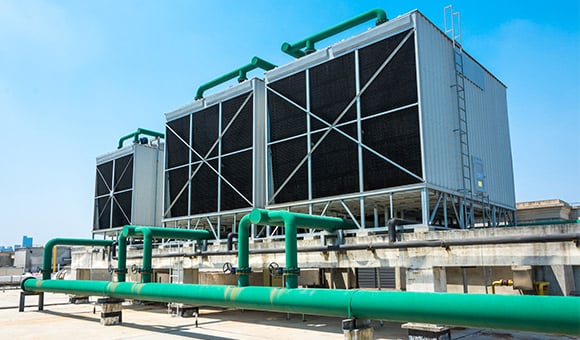
Legionella is a serious health risk. In the late 1970s, Legionella, the bacteria responsible for outbreaks of legionellosis and the potentially fatal pneumonia-type illness, Legionnaires’ disease, was first identified. Since then, facilities have become more aware of the risks associated with Legionella bacteria. Under certain environmental conditions, any water system could become a source for Legionella bacteria. Legionella bacteria are common in lakes, ponds, and rivers; however, outbreaks of Legionnaires’ disease rarely originate from these sources. Outbreaks of the illness occur from exposure to Legionella growing in purpose-built systems such as cooling towers, hot and cold-water systems, spa pools and industrial process systems. Water in these systems is maintained at a temperature high enough to encourage growth. Humidifiers, air washers, emergency showers, and ornamental fountains also pose a risk for Legionella bacteria growth.
In addition to health risks to workers, legionellosis outbreaks can have serious financial implications for industrial operations, ranging from health risks, loss of production due to plant shutdowns, damage to the company brand, and in some regions of the world, legal fines.
How Solenis will help your business with Legionella Risk Management
Solenis has been at the forefront of Legionella risk management for more than 30 years and offers a range of proven solutions designed to help customers reduce the risks associated with the water systems they operate. These include:
- Water Management Plans (WMP's) and risk assessments develope by trained Legionella specialists
- Effective treatment programs for microbiological, scale, and corrosion control
- Cooling tower cleaning and disinfection services by qualified Solenis Technicians
- Online reporting and documentation of field service activities
- Inspection services by trained and qualified inspectors
- Professional risk assessment / hazard analysis / flow diagrams / building surveys
- Independent third party validation, auditing, and laboratory services
- Building disinfections and equipment remediation
- Supplemental disinfection systems
- Point-of-use filtration
- Management training and consultation (i.e., epidemiological investigations)
- Cooling tower only and device only WMP’s
- Program inspections and certifications
- Professional risk assessment / hazard analysis / flow diagrams / building surveys
Solenis’ Legionella Risk Management Experts
We have an experienced and certified Water Risk Management Team dedicated to helping develop and implement a Water Management Plan that follows with ASHRAE, HSE and other guidance or regulations. Cooling towers, potable water and other water systems will require proper management, biocide selection, monitoring, control and disinfection to comply with the standard.
Solenis has the qualifications and experience to help you comply with regulations for cooling towers, potable water systems, disinfection, Water Management Plans, etc. Contact us to help you develop and implement a Water Management Plan.