Building More Sustainable Packaging
Not long ago, packaging sat quietly behind the scenes while product performance took center stage. That is no longer the case. Packaging has become one of the most visible intersections between product performance, environmental responsibility and customer trust. The choices companies make about packaging materials, design and data increasingly shape customer decisions, regulatory outcomes and the long-term resilience of supply chains.
A recent customer conversation reinforced this shift. They chose one of our solutions partly because its packaging was easier for their own customers to recycle in local systems. Recycling access varies by region, yet the insight was clear. Packaging design can support customer goals when it aligns with the infrastructure available in their markets. Increasingly, packaging is no longer a secondary detail, but a meaningful part of how products fit into real world systems.
Over the past year, our Packaging Sustainability Task Force has taken practical steps to help our organization respond to these expectations with more consistency, stronger measurement and clearer decision making. We are encouraged by the progress so far, and we also recognize that responsible leadership in packaging is not about reaching a finish line. It is about building the capability to improve over time and remaining transparent about what is working, what is complex and where learning is still underway.
Why packaging expectations are changing
Many customers now view packaging as part of their own sustainability journey. They are asking more questions about materials, recyclability, reuse systems and end of life pathways. This shift is visible across industries and regions, and it is influencing how value is defined beyond product performance alone.
Regulatory expectations are also evolving. Many regions have introduced Extended Producer Responsibility programs that require companies to contribute to national recycling and waste management efforts. Other markets have adopted plastic taxes that apply to certain types of packaging. These policies differ across countries, but together signal a broader shift. Packaging is moving from a compliance exercise toward a test of whether companies can design responsibly at scale.
Compliance remains essential, but it is not the only driver. The larger opportunity lies in building packaging approaches that remain effective under changing conditions. Stronger packaging data, improved supply chain resilience and closer alignment with customer needs allow companies to operate with greater confidence as expectations continue to evolve.
Learning from early action
Before the Task Force formally came together, teams across the business explored ways to improve packaging sustainability. One area of focus was increasing the use of post-consumer recycled plastic in select applications where it meets performance and safety requirements.
These efforts were valuable because they highlighted the realities many organizations face, including regional differences in recycling rates, variability in recycled material availability and the need for reliable data systems. These realities do not weaken the case for progress. They clarify where responsible leadership is required, particularly when decisions must balance sustainability ambitions with performance, safety and compliance.
Those early learnings helped shape the more structured and practical approach we use today.

What the Task Force has achieved so far
The most meaningful progress has not been any single packaging change. It has been the capability we are building to make better decisions repeatedly, across regions, portfolios and evolving expectations. Over the past year, the Packaging Sustainability Task Force has helped turn decentralized efforts into a more coordinated program designed to better support customers operating in complex regulatory and operational environments.
Key areas of progress include:
- Advancing design for recycling principles where compatible with safety and product requirements
- Building internal knowledge through training and shared resources
- Improving the accuracy and transparency of packaging related data and reporting
- Developing a database to track packaging related CO2 emissions to support informed decision making
- Strengthening processes for meeting EPR and plastic tax requirements
- Enhancing global regulatory monitoring
- Identifying cost saving opportunities
Together, these steps improve consistency and help embed sustainability considerations earlier in packaging decisions. They also make it easier to evaluate tradeoffs, explain choices clearly and respond as expectations continue to evolve.
Understanding our two packaging realities
- Institutional and hygiene focused solutions
-
-
These products often require purpose-designed packaging that supports safety, dosing and durability. In some regions, they also face higher EPR-related costs. Customers in this space expect packaging that performs reliably while continuing to improve in areas such as recyclability, recycled content and material efficiency where feasible.
-
- Industrial, food and beverage and commercial solutions
-
-
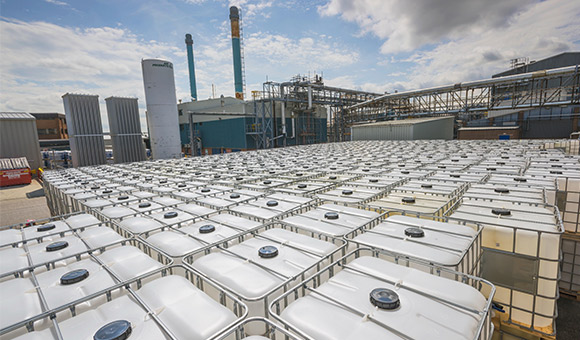
These offerings more often rely on standard packaging formats. While data is sometimes less centralized, there is greater potential to explore reuse systems where they are operationally practical. Safety and compliance remain top priorities, and sustainability enhancements must reinforce these requirements rather than compete with them.
-
Looking ahead: clearer and more measurable goals
Responsible leadership in packaging is not about claiming a finished state. It is about setting direction through goals that can be measured, managed and improved over time.
To maintain momentum, we are refining our packaging sustainability goals with a focus on clarity and practicality:
- Maintain circularity goals while expanding beyond their original scope
- Set measurable objectives that improve accountability
- Track packaging weight relative to product sold to support internal benchmarking
- Design new packaging for recyclability where local systems allow
- Establish a company level PCR content target where safety and performance requirements can be met
- Increase reuse in industrial packaging where it is practical to do so
These goals reflect an approach that prioritizes steady improvement and integrity over broad or unsupported claims.
Practical principles guiding packaging design
Several principles guide our packaging decisions across product categories:
- Design for recycling where infrastructure exists by favoring materials accepted in local systems
- Use recycled content where feasible and compatible with quality and safety requirements
- Right size packaging to reduce unnecessary weight and volume while maintaining performance
- Support reuse where it works, particularly in industrial settings where logistics allow
- Provide clear labeling to help customers handle packaging at end of life
These principles help ensure that progress is measurable, repeatable and suited to real world conditions.
What we are learning from customers
Ongoing customer conversations continue to shape our approach. Common themes include interest in reducing packaging waste across the value chain, questions about recycled content and design for recycling and a desire for clearer, more consistent packaging data. These perspectives help keep our efforts focused on areas that create the most value.
The path forward
Improving packaging sustainability is a long term effort that requires data, collaboration and a willingness to adapt. The progress we have made shows what is possible when teams work with clarity and purpose.
As expectations continue to rise globally, leadership in packaging will be defined not by the boldest claims, but by the discipline to build durable systems, share learning and continue raising the standard for responsible packaging over time. Packaging sits at the intersection of climate, resource use and customer trust. No company can address these challenges alone, but through thoughtful choices, capability building and collaboration, meaningful progress is possible.