Cyclospora periodically brings food safety back into focus, especially for fresh produce and the broader food value chain. But the issue is bigger than any single outbreak or alert. It tests prevention, resilience, continuity, customer confidence and supply chain performance.
Those alerts are not abstract. Cyclospora has been associated with multistate outbreaks and complex investigations in which the source of contamination can be difficult to confirm. That uncertainty is part of the lesson itself.
Cyclospora cayetanensis is a parasite, not a bacterium. That distinction matters because its biology shifts control upstream. Humans are the only known host, and the parasite is shed in feces in a form that is not yet infectious. It needs roughly one to two weeks in the environment to sporulate. Direct person-to-person transmission is therefore unlikely, and contamination almost always originates upstream through feces-contaminated water, soil or hands. Effective management depends on connected controls across agricultural water, worker hygiene, supplier practices, receiving procedures, traceability, sanitation and verification.
When emerging risks test the food system, connected controls help organizations respond with discipline, consistency and confidence.
What Cyclospora Makes Clear
The most important distinction for anyone running a sanitation program is that Cyclospora control is preventive, not reactive. Chlorine and the other antimicrobial treatments used routinely on produce and food contact surfaces are not effective against the parasite’s protective outer layer, washing alone does not reliably remove it and cooking is the only method confirmed to inactivate the parasite in food. Stronger control therefore comes from preventing contamination in the first place, verifying suppliers and water practices, ensuring worker hygiene and maintaining traceability that supports rapid action when concerns arise.
A clearer way to frame the risk is this:
- No single product or process is a stand-alone Cyclospora solution
- Prevention, verification and traceability matter more than response alone
- Cleaning and sanitation remain critical for day-to-day hygiene and for the pathogens they are validated against, but they are not a kill step for Cyclospora
- Resilience depends on connected controls across suppliers, facilities, people, water and operations
In practical terms, Cyclospora risk management depends less on a single kill step and more on a connected prevention system. That system should link supplier verification, agricultural water management, worker hygiene, receiving checks, sanitation, traceability, training and ongoing verification.
Why Connected Food Safety Systems Matter
Complex food safety risks rarely have one answer. Cyclospora makes that clear.
Pathogens, parasites and other contaminants can enter the food system at multiple points. Cyclospora is often linked to fresh produce eaten raw, including leafy greens, herbs and berries. The risk usually begins upstream, through contaminated agricultural water, soil or asymptomatic workers.
Prevention therefore sits with grower selection, agricultural water management, worker health and hygiene, sanitary facilities and supplier verification, long before product reaches a processing line.
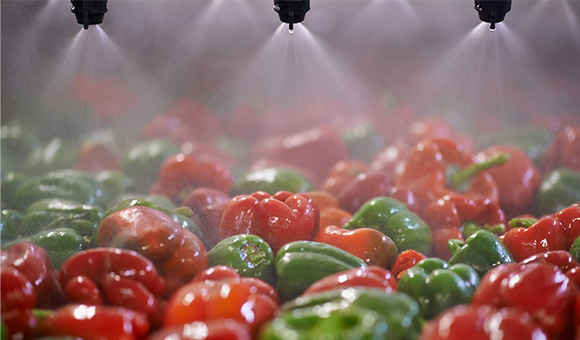
Cleaning and sanitation remain essential for the pathogens that dominate day-to-day risk. For Cyclospora, however, they are not a kill step. The protective outer layer resists routine chemical disinfection. In this context, sanitation helps limit cross-contamination and keep the broader hygiene program sound. It works best when integrated with preventive controls, traceability, monitoring, training and verification across the operating system.
The relevant question is whether the system is strong enough to manage evolving risks with discipline, expertise and confidence.
Water deserves particular attention because it is both a contamination route and a control point. Agricultural water used for irrigation and post-harvest handling has been implicated in produce contamination. In processing environments, water quality affects cleaning performance, rinse steps and product quality. Managing water sources, treatment and monitoring is part of food safety, not a utility question.
Solenis’ Role: Supporting Customers Through System-Level Expertise
Food safety depends on more than individual interventions. It requires connected programs, practical technical guidance and consistent execution across food production, processing and service environments.
That is where system-level support matters. Effective programs translate food safety principles into daily routines: how teams clean, how procedures are verified, how water quality is managed, how workers are trained and how corrective actions are documented.
The goal is not to react to one headline risk. It is to build operating discipline that can help reduce variability across sites, teams and supply chain touchpoints over time.
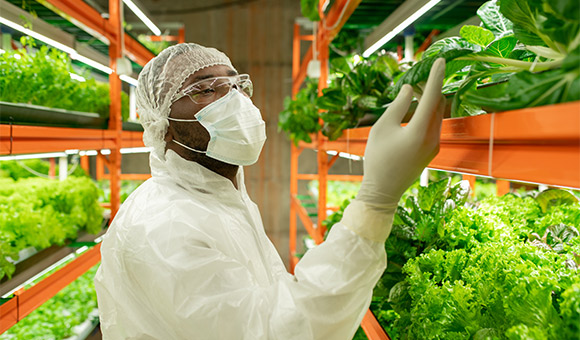
Across the food value chain, Solenis supports that discipline in areas such as:
- Hygiene and sanitation programs
- Food safety training and technical support
- Contamination control and operational best practices
- Water quality management support
- Programs that strengthen consistency and verification
These capabilities are most valuable when they are part of a broader system. Cyclospora is not a reason to overstate a single solution. It is a reminder that stronger food safety programs connect upstream prevention, facility hygiene, supplier controls, training, water management and verification.
That system view is the real lesson. The organizations best prepared for emerging food safety risks are not only looking for answers after an issue appears. They are strengthening the routines, controls and partnerships that make prevention more reliable every day.
A Leadership Test Beyond the Headlines
Cyclospora may move in and out of the news cycle. The leadership challenge remains.
Are controls connected from farm and supplier through processing, distribution and service? Are water quality, hygiene, sanitation, training, traceability and verification managed as one system?
Cyclospora is one example of a broader food safety reality: managing risk depends on connected systems, disciplined execution, verified controls and continuous improvement.
The opportunity is not to claim a simple answer to a complex risk. It is to help strengthen systems that can reduce risk, support continuity and protect trust across the food value chain.