Quick Summary
A structured dog-friendly hotel program can help a hotel attract an expanding travel segment and create new opportunities for room, service and pet-related revenue. To realize that potential, hotels need a consistent pet-friendly hotel housekeeping program that manages hair, odors, stains and allergens while supporting efficient room turnover and protecting the experience of every guest.
For a growing share of hotel guests, a dog is not a complication. It is a travel companion. Whether a hotel welcomes dogs can influence the choice of destination, accommodation and length of stay.
This creates a commercial opportunity for hotels. A well-designed pet-friendly offer can help a property differentiate itself, attract new guests and create additional revenue through pet fees, food and beverage, room packages and related services.
But the opportunity only works when operations can deliver consistently.
If the next guest notices hair, odors, stains or signs of the previous pet stay, the experience can quickly lead to complaints, negative reviews and lower confidence in room quality.
A successful dog-friendly hotel program therefore requires more than a welcoming pet policy. It requires an operational framework that helps housekeeping teams restore every room to the same clean, fresh and guest-ready standard.
Why Dog-Friendly Hospitality Is No Longer a Nice-to-Have
The hospitality industry continually looks for ways to reach new guest segments, increase revenue per available room and build loyalty. Pet-friendly travel presents an opportunity to support each of these goals.
Research from the University of Surrey found that the relationship between people and their dogs influences travel behavior. The availability of dog-friendly information can affect the locations and accommodations travelers search for and subsequently book.
For hotels, this means a pet policy can influence more than the guest experience after arrival. It can influence whether a property enters the booking consideration set at all.
Hotels that communicate a clear, well-managed pet offer can:
- Differentiate themselves in a competitive market.
- Reach guests who actively search for dog-friendly accommodation.
- Create pet-related packages and service opportunities.
- Build relationships with travelers who want to include their dogs in future trips.
- Strengthen the overall hotel experience through clear information and thoughtful amenities.
Pet-friendly hospitality has therefore moved beyond being a special request or limited amenity. With the right operational support, it can become part of a hotel’s broader revenue and guest loyalty strategy.
Revenue Extends Beyond the Pet Fee
A pet fee may be the most visible source of pet-friendly hotel revenue, but it is not the only opportunity.
Hotels can develop packages that combine accommodation with relevant amenities and services, such as:
- Dog beds, bowls and welcome treats.
- Information about local dog-walking routes.
- Access to pet-friendly dining areas.
- Premium room categories with direct outdoor access.
- Partnerships with local pet-care providers.
- Extended-stay packages for guests traveling with dogs.
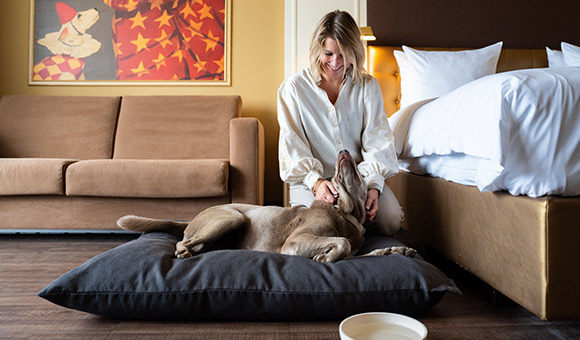
Housekeeping Protects the Return
The revenue case depends on a hotel’s ability to keep pet-friendly rooms clean, flexible and ready for future bookings.
Pet rooms that require excessive recovery time may create operational pressure and reduce inventory flexibility. Rooms returned to service without the necessary cleaning can create an even greater risk through complaints, compensation requests and damage to the hotel’s reputation.
Housekeeping is therefore not only responsible for cleaning the room. It protects the revenue opportunity by ensuring the hotel can welcome pets without compromising standards.
What Pet-Friendly Rooms Demand From Housekeeping
The primary operational challenge is not the presence of a dog. It is whether the room can be restored quickly and consistently to the standard expected by the next guest.
Effective pet-friendly hotel housekeeping requires particular attention to:
- Pet hair
- Dander and allergens
- Organic residues
- Odor-causing particles
- Mud and outdoor debris
- Pet Food residues and stains
When managed well, pet-friendly hospitality becomes easier to scale: rooms recover faster, guest satisfaction is protected, reviews are less exposed to cleanliness complaints and hotels can confidently promote dog-friendly stays as part of their broader experience.
Why Pet-Friendly Room Odor Control Matters
Many people assume that cleaning a pet-friendly room is primarily about removing visible hair. In practice, odor control can be a more persistent challenge.
Pet-related odors may originate from microscopic organic residues left on carpets, upholstery, bedding and other surfaces. A room can appear visually clean while odor-causing material remains embedded in textile fibers.
To effectively eliminate pet odors in hotel rooms, it's important to treat the source of the problem instead of covering it up with scented products. Depending on the surfaces and contamination involved, this may require:
- Thorough removal of pet hair and residue.
- Targeted cleaning of pet-contact areas.
- Appropriate treatment of spots and stains.
- Deep cleaning of carpets and upholstery
- Room ventilation.
- Periodic restorative cleaning of high-risk rooms.
The goal is not to make the room smell pleasant. The goal is to make the room smell neutral, fresh, and free from any evidence of a previous pet stay.
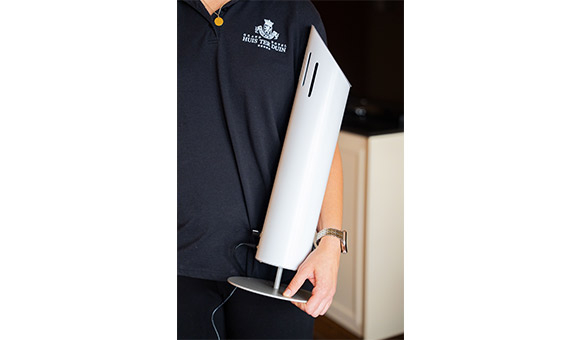
Soft Surfaces Require Special Attention
As the pet-friendly hospitality segment continues to grow, soft surface treatment is becoming an increasingly valuable part of room restoration.
Every pet stay leaves behind microscopic particles that cannot always be removed through routine vacuuming alone. Over time, these particles can accumulate within carpets, upholstery, curtains, and mattresses, contributing to odor retention and reduced room freshness.
Regular deep cleaning and textile maintenance can help hotels:
- Improve room freshness
- Reduce odor retention
- Support allergen management
- Extend the life of carpets and upholstery
- Protect furniture investments
- Maintain consistently high guest satisfaction
For housekeeping teams, soft surface treatment is not simply a cleaning activity.
It is an investment in guest experience, asset protection, and brand reputation.
Free Download: Vacuuming method card
Building a Pet-Friendly Housekeeping Program That Works
A successful pet-friendly hotel housekeeping program should be clear, repeatable and practical for the people responsible for delivering it.
Define the Hotel Pet Policy
Effective hotel pet policy best practices begin with clear operational rules. The policy should define which rooms accommodate pets, any restrictions that apply, available amenities and the responsibilities of guests.
The policy should also connect directly to housekeeping. Teams need to know when a pet has occupied a room and whether additional services or inspections are required.
Clear communication between reservations, front desk, housekeeping and maintenance helps reduce uncertainty and allows teams to plan the room recovery process.
Create a Standard Cleaning Protocol
A dog-friendly hotel cleaning protocol should outline the required tasks from initial inspection through final release.
The protocol can cover:
- Enhanced room inspections
- Targeted odor management
- Additional attention to textiles and upholstery
- Structured stain treatment procedures
- Preventative maintenance programs
- Enhanced staff training
The precise process should reflect the hotel’s surfaces, equipment, cleaning products and brand standards. Housekeeping teams should also receive the training needed to apply the protocol safely and consistently.
Support Efficient Pet-Friendly Hotel Room Turnover
A strong pet-friendly hotel room turnover process should protect quality without introducing unnecessary delays.
Standardized checklists, appropriate products and clear inspection criteria can help teams understand what must be completed before a room returns to inventory. Tracking recurring issues can also help management identify whether certain room materials, furnishings or layouts require preventive maintenance.
When the process is predictable, hotels can manage occupancy more confidently and reduce the risk that pet-designated rooms remain unavailable longer than necessary.
Managing Allergens and Non-Pet Guest Confidence
A pet-friendly hotel must remain welcoming to people who travel without pets. Guests may have concerns about hair, odors, room cleanliness or allergens, even when they are staying in a room that is not specifically designated as pet-friendly.
As a result, managing allergens effectively is essential for hotels that want to welcome pets while ensuring a comfortable stay for all guests.
Build Allergen Management Into the Process
An allergen-aware room recovery program should emphasize residue removal, soft-surface care and consistent quality inspection.
Relevant measures may include:
- Thorough vacuuming using appropriate equipment.
- Cleaning of high-contact surfaces.
- Maintenance of carpets and upholstery.
- Attention to curtains, mattresses and other textiles.
- Clear designation and tracking of pet-friendly rooms.
- Preventive maintenance and restorative cleaning.
- Final inspection against defined standards.
Maintain One Standard for Every Guest
Pet owners may value welcome amenities and dog-friendly services. Guests traveling without pets may place greater emphasis on cleanliness, freshness and reassurance.
These expectations do not need to conflict.
A structured program allows a hotel to welcome dogs while maintaining a consistent room standard. It also helps demonstrate that pet-friendly hospitality is a managed service rather than an informal exception.
FAQ About Dog-Friendly Hotel Programs
A dog-friendly program can help a hotel attract travelers whose booking decisions are influenced by their pets. It can also create opportunities for pet fees, packages, premium room options and related services. Research indicates commercial potential among pet owners seeking accommodation that meets their needs.
The protocol should include room inspection, hair and residue removal, appropriate stain treatment, odor-source management, soft-surface care and a final quality check. The process should be adapted to the hotel’s surfaces, cleaning systems and brand standards.
There is no single challenge for every property. Common issues include pet hair, odor-causing residues, stains, soft-surface contamination and room turnover. A structured process helps teams identify and manage each risk consistently.
Hotels can use clear room policies, targeted room recovery procedures, preventive textile care and consistent inspections.
Designating particular rooms can simplify scheduling and maintenance, but the right approach depends on the property’s layout, demand and operational model. Any zoning strategy should support inventory flexibility while maintaining consistent standards.
Turning Pet-Friendly Hospitality Into Sustainable Growth
Pet-friendly travel creates a relevant opportunity for hotels seeking new guest segments and additional revenue. However, the strongest programs are built on more than welcoming amenities.
A successful dog-friendly hotel program connects revenue strategy, guest communication and housekeeping execution. It provides guests with clear information, gives operations teams consistent procedures and ensures rooms can be returned to service without compromising quality.
The role of housekeeping is central. A structured pet-friendly hotel housekeeping program supports room flexibility, helps manage hair, odors, stains and allergens, and protects confidence among pet-owning and non-pet-owning guests.
When these elements work together, hotels can welcome pets as part of a well-managed commercial strategy while continuing to provide the clean, fresh and guest-ready experience every traveler expects.
Ready to Elevate Your Operations?
Hotels can turn everyday cleaning into a measurable driver of net positive hospitality by rethinking their cleaning products.
Request your free set of advices for smooth operations